LUMOS: A New Era for Families and Innovation
At Lumos Technologies, we believe every child with autism deserves an education and therapy experience as unique as their own story. Traditional interventions, while valuable, often struggle to adapt to the individual pace and needs of each child. This is where Lumos is opening an extraordinary new chapter: one that blends compassion, technology, and data-driven insight to unlock every child’s potential.
Personalized Pathways for Every Child
Our tool creates a personalized learning and therapy plan for each child. Imagine an environment where lessons automatically adjust to a child’s comfort level, focus, and progress, allowing learning to feel natural, engaging, and rewarding.
This personalization doesn’t replace therapists or teachers, but it enhances their work, helping professionals focus on what matters most: human connection and meaningful progress.
Smart Companions for Growth and Confidence
Social “robots” and virtual assistants are revolutionizing autism therapy by providing predictable, low-stress interactions, which are perfect for children who thrive on routine. These companions help children practice communication, emotional recognition, and social skills in a safe, controlled setting, while keeping sessions fun and encouraging.
For families, this means consistency and support that can continue beyond the therapy room, even at home.
Accessible Support for Every Community
AI is also breaking down barriers of distance and cost. Through remote monitoring and computer-assisted therapy, families in rural or underserved areas can now access high-quality, personalized care without waiting months for appointments. For parents, that means peace of mind knowing their child’s growth doesn’t have to pause because of geography or resource limitations.
Data-Driven Insights for Continuous Progress
One of Lumo’s greatest strengths is its ability to learn. By continuously collecting data on each child’s progress, our systems help therapists and educators make evidence-based decisions. Families receive clearer progress reports, while professionals can fine-tune strategies in real time, ensuring that every effort leads to measurable improvement.
Why Investors Should Pay Attention
This isn’t just innovation, it’s impact with purpose. The global autism therapy market is rapidly expanding, and technologies that integrate AI personalization are at the forefront of this transformation. Investing in Lumos Technologies means supporting a mission that delivers both social good and sustainable growth.
Our vision is simple yet powerful:
To empower families through intelligent, accessible, and compassionate technology that helps children with autism thrive.
A Brighter Future Starts Now
At Lumos Technologies, we are not just developing tools, we’re building hope through innovation. By combining cutting-edge AI with human empathy, we are redefining what’s possible in autism education and therapy.
If you’re a parent seeking smarter, personalized solutions for your child (or an investor looking to be part of a mission that changes lives) we invite you to join us. Together, we can light the path toward a more inclusive and connected world.
Source:
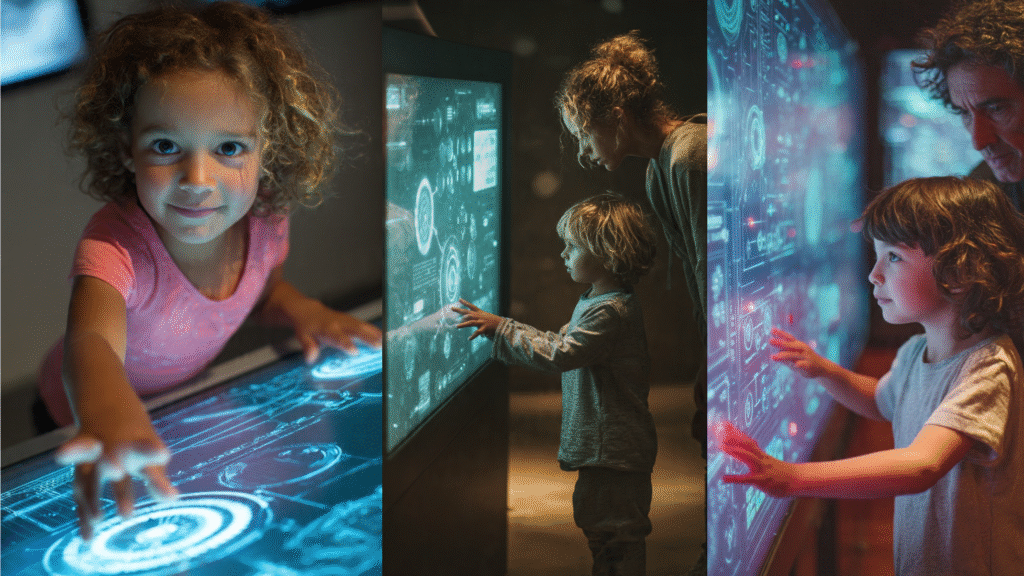
This image was generated using AI.
Lan, L., Li, K., & Li, D. (2025). Exploring the application of AI in the education of children with autism: a public health perspective. Frontiers in psychiatry, 15, 1521926. https://doi.org/10.3389/fpsyt.2024.1521926
Meneses do Rêgo, A. C., & Araújo-Filho, I. (2024). Leveraging artificial intelligence to enhance the quality of life for patients with autism spectrum disorder: A comprehensive review. European Journal of Clinic Medicine, 5(5).
Atturu, H., Naraganti, S., & Rao, B. R. (2025). Effectiveness of artificial intelligence–based platform in administering therapies for children with autism spectrum disorder: 12-month observational study. JMIR Neurotech, 4, e70589. https://doi.org/10.2196/70589
Zhang S. (2025). AI-assisted early screening, diagnosis, and intervention for autism in young children. Frontiers in psychiatry, 16, 1513809. https://doi.org/10.3389/fpsyt.2025.1513809
Lan, L., Li, K., & Li, D. (2025). Exploring the application of AI in the education of children with autism: a public health perspective. Frontiers in psychiatry, 15, 1521926. https://doi.org/10.3389/fpsyt.2024.1521926
Iannone, A., & Giansanti, D. (2023). Breaking Barriers-The Intersection of AI and Assistive Technology in Autism Care: A Narrative Review. Journal of personalized medicine, 14(1), 41. https://doi.org/10.3390/jpm14010041
Salomon, C., Heinz, K., Aronson-Ramos, J., & Wall, D. P. (2025). An analysis of the real world performance of an artificial intelligence based autism diagnostic. Scientific reports, 15(1), 29503. https://doi.org/10.1038/s41598-025-15575-8